

Dear investors,
Sam Altman just dropped the most expensive prediction in history.
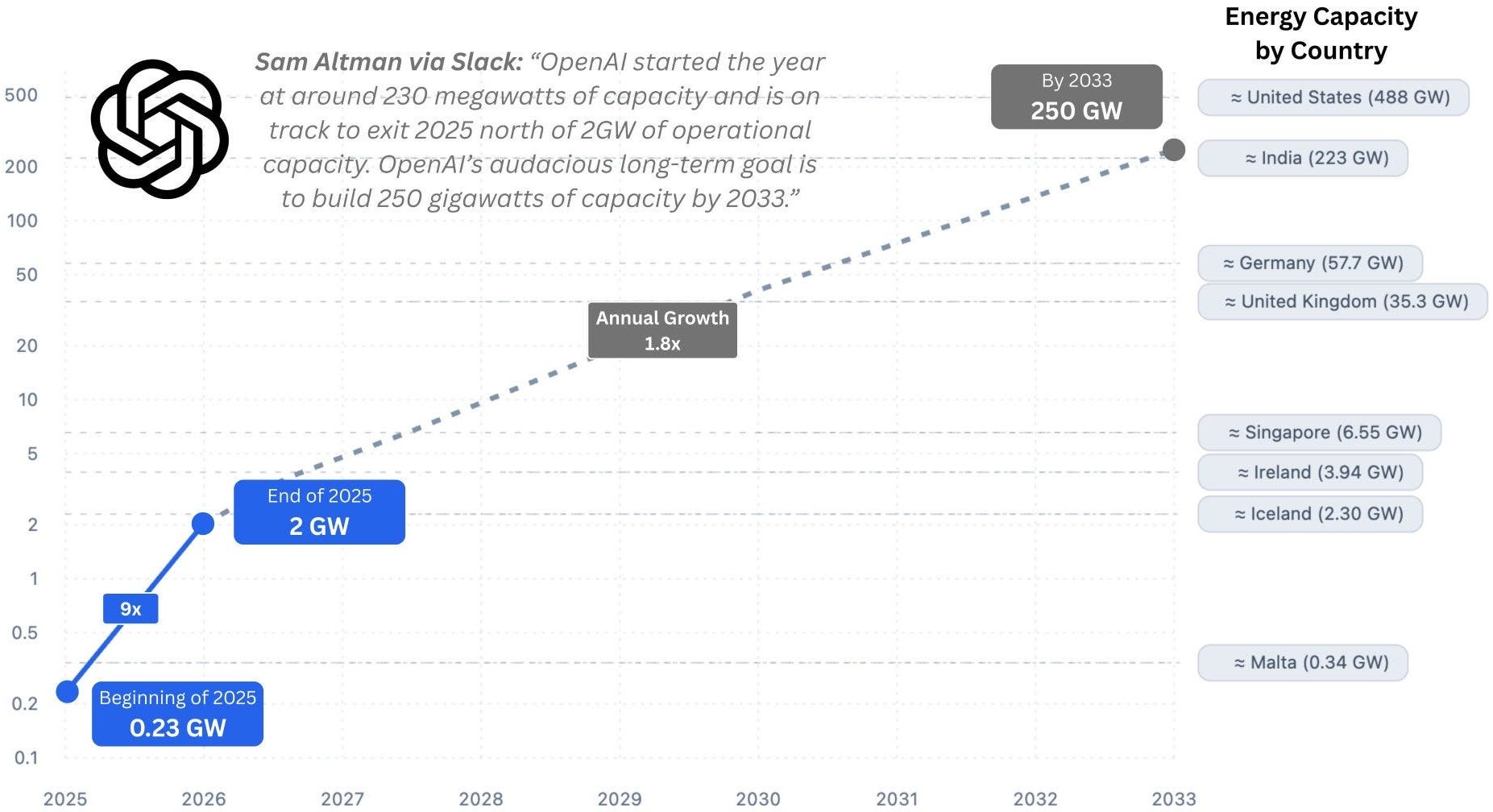
By 2033, OpenAI alone is projected to consume 250 gigawatts of energy—more than the entire country of India uses today.
In a leaked internal memo (reported by Fortune and others in Nov 2025), OpenAI CEO Sam Altman set an extremely ambitious long-term goal:
“Build or secure 250 gigawatts (GW) of dedicated power capacity by 2033 just for OpenAI’s AI training and inference needs.”
How much power is 250 GW really?
250 GW = 250,000 megawatts (MW) = 250,000,000 kilowatts (kW)
For comparison:
The largest nuclear power plant in the U.S. (Palo Verde) produces ~4 GW
The entire United Kingdom’s average electricity demand is ~30–35 GW
All of Google’s global data centers combined use roughly 15–20 GW (2024 estimate)
OpenAI alone wants the equivalent of 7–8 entire United Kingdoms’ worth of electricity, or roughly 15% of the entire United States’ total generating capacity, dedicated only to its AI clusters by 2033.
To manage this, OpenAI would need to buy ~30 million high-end GPUs every single year and run them 24/7/365.
Rough math:
Assume future GPUs in 2030 are 5–10× more power-efficient than 2025 H100s but models are 100–1000× bigger → net ~50–200× more total compute needed.
250 GW of power ÷ ~800 W per future GPU ≈ 312 million GPUs running simultaneously
GPUs used for training burn out or become obsolete fast when run flat-out (typical lifetime 2–4 years in AI training)
So every year you have to replace ~1/3 of them → 100+ million replacements + growth → easily 30–50 million new GPUs purchased per year
Nvidia’s entire production of H100/H200/B100/B200 GPUs in 2024–2025 is estimated at only ~3–5 million units total worldwide. So OpenAI alone would need 6–10× Nvidia’s entire current output every year!
And here’s the kicker:
OpenAI will likely be just one of a dozen companies requiring that much power.
This isn’t about semiconductors anymore. The real AI supercycle is happening in energy infrastructure, and most investors are looking in the wrong direction.
The artificial intelligence revolution has captivated Wall Street with semiconductor stocks and software platforms, but the most explosive investment opportunity may be hiding in plain sight.
While everyone chases the latest AI model or chip manufacturer, a parallel energy crisis is unfolding that will reshape the global economy and create generational wealth for investors who position themselves correctly
If you want to follow along with real money, here's how to copy my portfolio in 5 minutes.
The same AI boom that needs all this power is about to move into factories and homes, and I show who profits when robots leave the lab in Humanoid Robots Are Coming.
OpenAI Math That Breaks Everything
Sam Altman’s internal targets are physically impossible without unprecedented infrastructure spending.
OpenAI CEO has floated internal targets of 250 gigawatts of computing capacity by 2033—roughly half of America’s power demand.
To put this in perspective:
If OpenAI achieved this capacity today, it would rank as the seventh-largest country in the world by electricity production capacity, ahead of France, South Korea, Brazil, and Saudi Arabia.
And OpenAI isn’t alone in this power-hungry race.
Citi analysts estimate it costs approximately $50 billion to establish one gigawatt of computing capacity, accounting for hardware, energy infrastructure, and data center development.
Based on Sam Altman’s 250 GW target, the implied cost would reach a staggering $12.5 trillion!
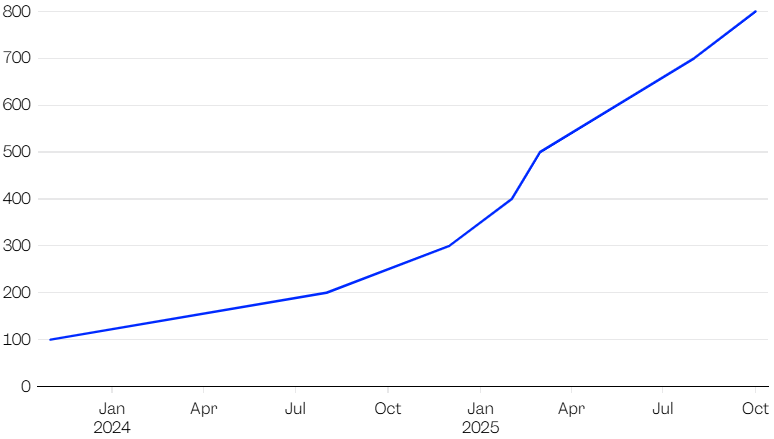
There’s no assurance that OpenAI or other AI companies will secure the necessary funds to cover these expenditures.
Citi estimates the company’s revenue will only rise to around $163 billion by 2030—a mere 13% of its expenses.
This financing gap suggests that energy infrastructure investments may need to come from utilities, governments, and ultimately ratepayers rather than the AI companies themselves.
The artificial intelligence boom has created an unprecedented demand shock for electricity that most investors have failed to comprehend.
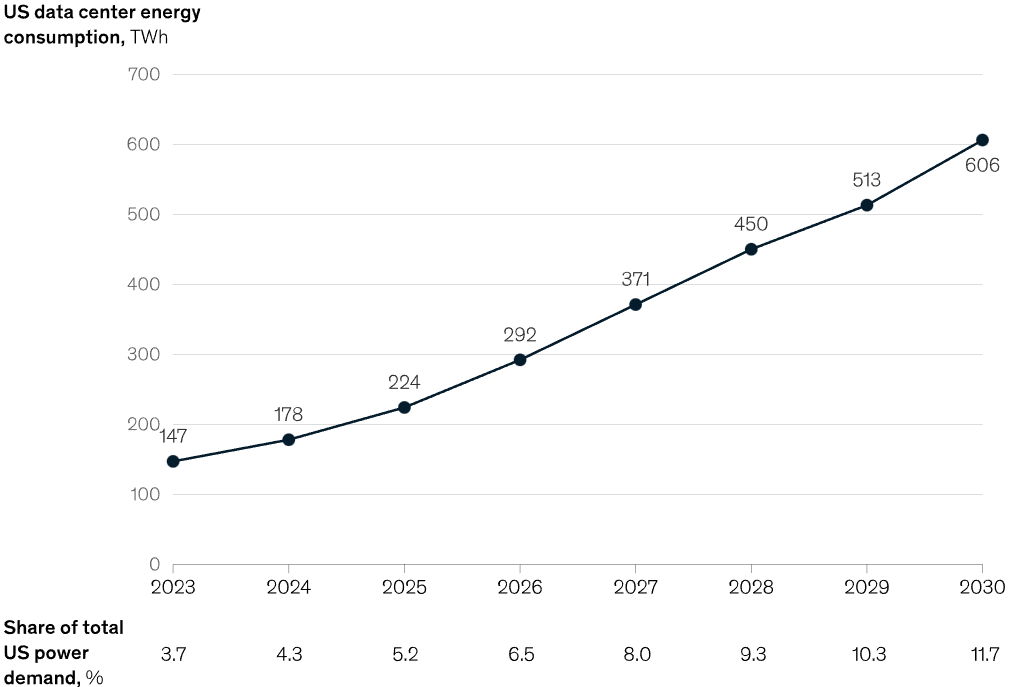
Data centers consumed approximately 415 terawatt-hours globally in 2024, representing about 1.5% of total global electricity demand.
By 2030, that figure is projected to more than double to 945 terawatt-hours—roughly equivalent to Japan’s entire electricity consumption.
In the United States specifically, the growth trajectory is even more dramatic.
Goldman Sachs calls this,
“the most constrained infrastructure bottleneck in modern history.”
On November 9, 2025, Goldman Sachs Research published their updated data center power demand forecast: 175% surge by 2030 versus 2023 levels—the equivalent of adding electricity demand greater than the entire nation of France.

The U.S. grid currently operates at 62 gigawatts of data center capacity.
By 2030, we need 170 gigawatts.
That’s 108 gigawatts of new capacity. In five years!
Even the conservative case requires building capacity equal to South Korea’s entire grid. The aggressive case requires building Germany’s entire grid—just for AI.
During a labor shortage. With 10-15 year nuclear plant construction timelines.
Training sophisticated AI models demands immense computing power—GPT-4 training alone required around 30 megawatts of power, while OpenAI’s Stargate initiative anticipates multi-gigawatt data centers.
A typical generative AI query through ChatGPT uses approximately 10 times the energy of a standard Google search, fundamentally changing the economics of digital services.
By 2035, data centers are projected to account for 11.6% of all U.S. electricity demand, more than triple their 3.5% share today.
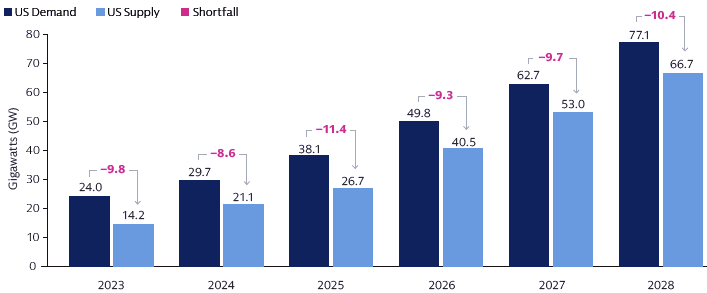
This represents a fundamental shift in the American energy landscape, creating opportunities in power generation, transmission infrastructure, and energy efficiency technologies that dwarf the potential returns from semiconductor investments alone.
The Grid Can’t Handle What’s Coming
The electrical grid infrastructure in the United States was not designed for the explosive growth in data center demand that AI is driving.
Power shortages are already delaying data center projects by two to six years, creating a bottleneck that threatens the entire AI revolution.
This year alone, electricity demand from data centers in the U.S. is estimated to rise 22%.
The challenge isn’t just about generating more electricity—it’s about delivering that power where it’s needed, when it’s needed, with the reliability that AI operations demand.
Large AI data centers can require dramatically more energy per square foot than traditional data centers.
A five-acre data center augmenting central processing units with specialized graphics processing units might see its energy usage increase from 5 to 50 megawatts—a tenfold increase.
The hyperscalers—the leading AI infrastructure developers scaling data center networks globally—are constructing facilities that dwarf anything previously built.
Each of the top three hyperscalers’ largest U.S. data centers currently draw less than 500 megawatts of power, but the largest data centers they are constructing or planning to build require between 1 and 2 gigawatts.
Some planned campus developments could consume 5 gigawatts or more, equivalent to the power needs of several medium-sized cities.
“The future of AI will not be forged in code and large language models alone. It will be built with concrete, steel and silicone.”
—Dan Dee
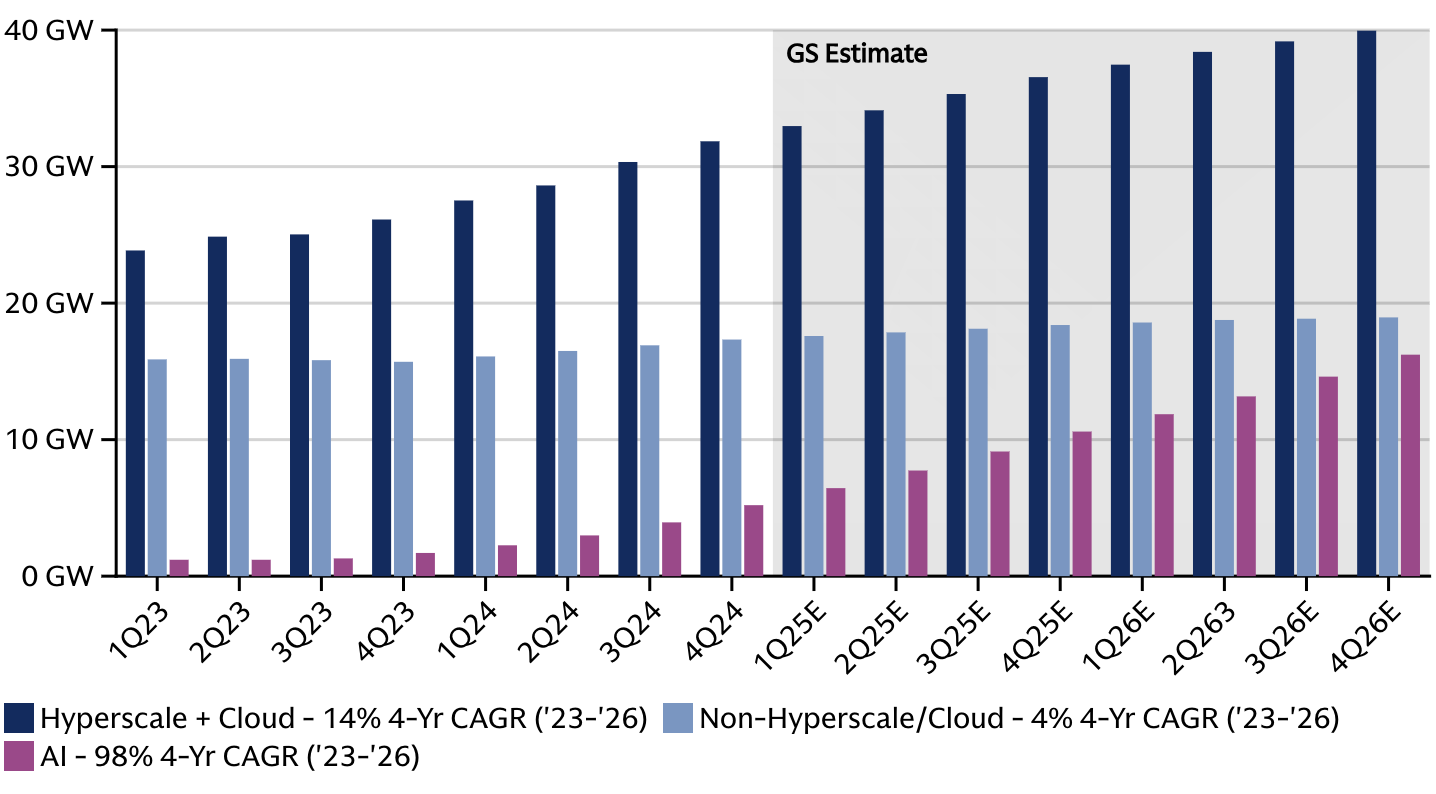
This massive supply-demand imbalance creates an investment opportunity that transcends traditional utility sector dynamics.
The top five hyperscalers—Amazon , Microsoft, Google, Meta, and Oracle —spent $412 billion in combined capital expenditures in 2025 alone, with 60-70% earmarked for data center and power infrastructure.
That’s $442 billion flowing into power infrastructure in a single year—more than the entire U.S. renewable energy sector invested over the past decade.
Translation: AI revolution has moved from a software problem to a physics problem.
Today, the hyperscalers have quietly flipped the switch. They’re no longer in “cost-optimization” mode when it comes to power. They’re in full-blown survival mode.
Microsoft, Google, Amazon, and Meta are now racing to lock in guaranteed, always-on electricity at almost any price — because the first ones to secure gigawatts of reliable baseload power will enjoy an unassailable, decade-long moat over everyone else.
In the AI arms race, megawatts have become the new oil.
The companies that own (or control) them don’t just win — they render latecomers mathematically incapable of catching up.
Power is becoming the ultimate barrier to entry!
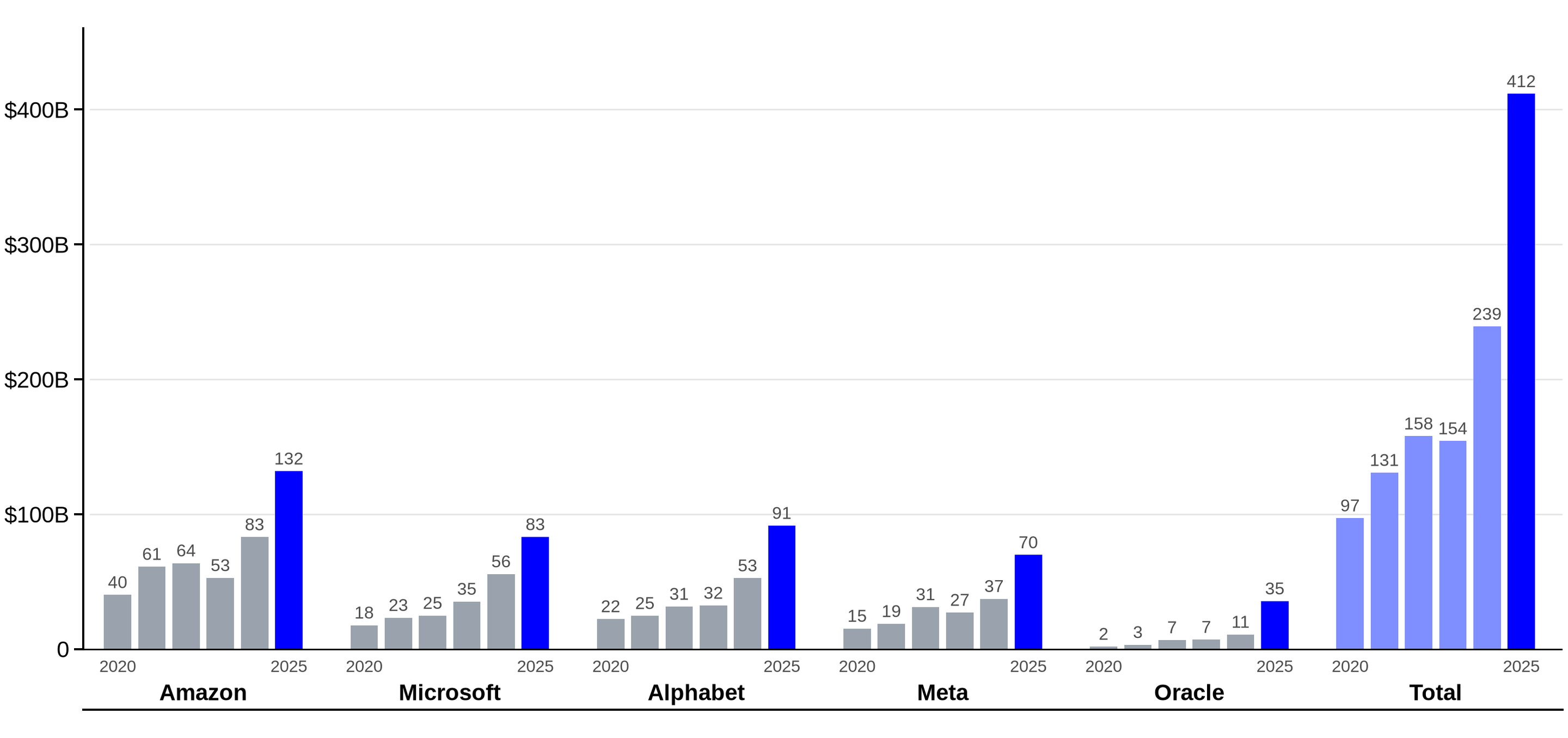
Let that sink in:
Tech companies are spending more on electricity infrastructure than semiconductors!
The deals prove desperation has replaced optimization:
Amazon: $650 million for Talen Energy data center campus in Pennsylvania, paying 40% premium to market rates specifically for direct nuclear plant connection delivering 1,920 MW through 2042.
Microsoft: $26.85 million for 1,350-acre North Carolina site near Duke Energy nuclear facilities, then negotiated separate 20-year power purchase agreement at undisclosed (likely premium) rates.
Google: Signed multiple power deals totaling $3+ billion in commitments for data centers in Ohio, Indiana, and Virginia—all requiring new generation capacity.
Meta: Advanced negotiations for multi-gigawatt agreements in Texas and Louisiana, reportedly offering take-or-pay provisions guaranteeing payment even if capacity isn’t fully utilized.
When companies worth $8+ trillion combined are paying 40% premiums and offering guaranteed payment for unused electricity, that’s not normal corporate behavior.
That’s existential panic.
Virginia’s Grid: Canary In The Data Center Coal Mine
The scenario is materializing in Northern Virginia—the world’s largest data center market with 13% of global operational capacity.
A state-commissioned study by Energy + Environmental Economics (E3) just delivered a verdict that should terrify every tech CEO: Virginia’s power grid cannot support current data center commitments without unprecedented infrastructure investment!
The report’s conclusion is devastating:
“The sustained scale and pace of data center growth in the region will likely be constrained by new energy infrastructure development. Grid interconnection policies will delay new load from connecting until the infrastructure to serve it reliably is in place. These policies will constrain data center load growth to the rate of infrastructure expansion.
Building enough infrastructure for data center demand will be very difficult and meeting half that demand is still difficult”
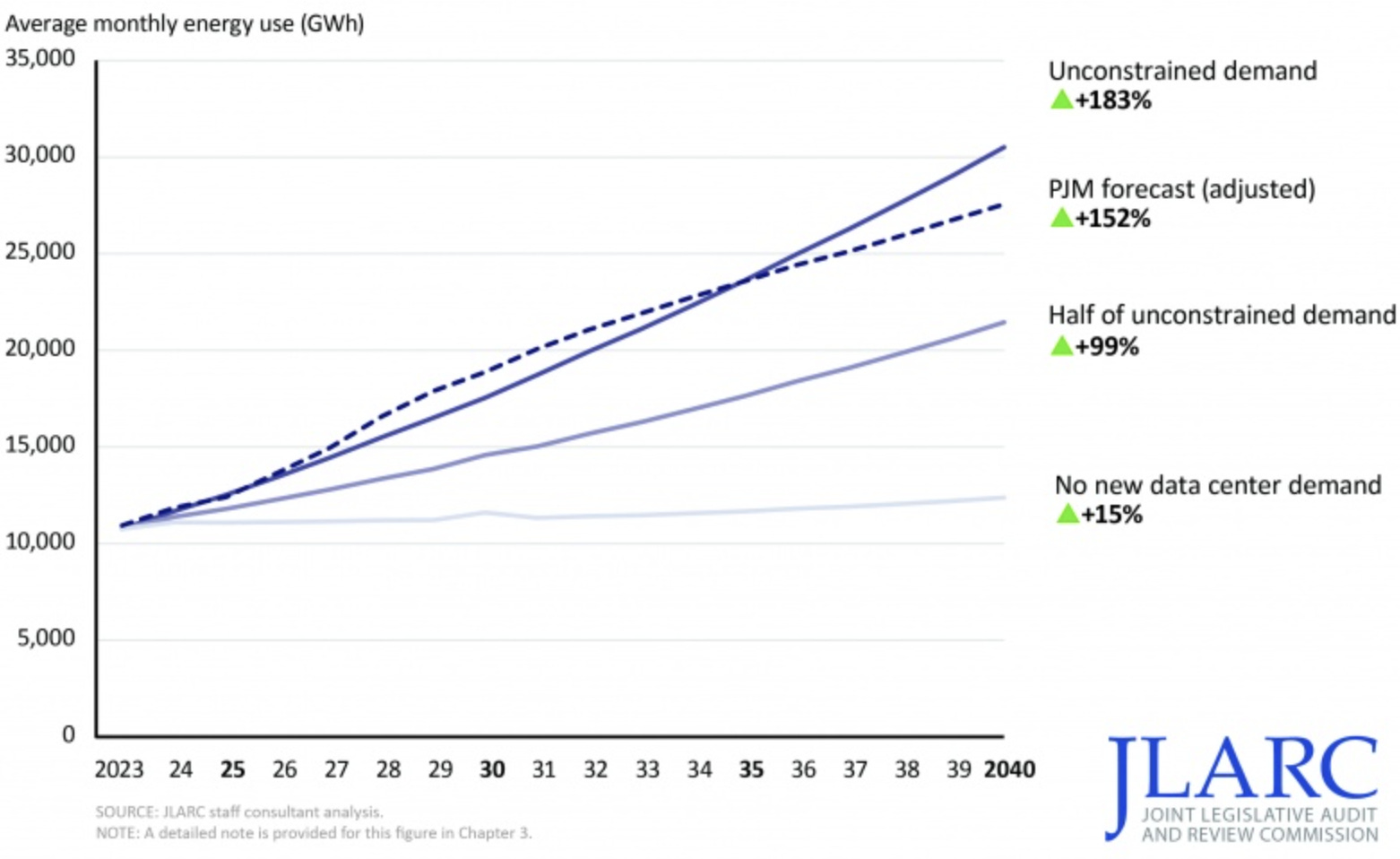
Translation: Data centers already approved and funded may never turn on because the electricity doesn’t exist.
And Northern Virginia represents just 13% of global data center capacity.
What happens when this bottleneck hits every major market simultaneously?
The $5 Trillion Infrastructure Gap Nobody Can Fill
I’ve studied every major U.S. infrastructure cycle since 1900.
This AI power infrastructure wave has three characteristics that make it the most investable in modern history:
1. Demand Certainty Is Contractually Guaranteed
Past cycles: Infrastructure built hoping demand would justify it.
Telecom companies laid 100 million miles of fiber in 1999-2001 betting internet traffic would grow exponentially.
When dot-com bust hit, 70% of that fiber went unused for a decade.
This cycle: Amazon, Microsoft, Google, Meta sign 20-year offtake agreements BEFORE utilities break ground.
Constellation doesn’t build capacity hoping Microsoft will buy.
Microsoft already committed to buying—in writing, through 2042.
2. Competition Barriers Are Insurmountable
Semiconductor fabs: $10-20 billion, 3-5 years to build.
Result: TSMC , Samsung , Intel all building competing fabs.
Nuclear plants: $10-20 billion, 10-15 years to build, require NRC approvals, environmental reviews, local opposition battles.
Result: Maybe 5 companies globally capable of executing. And hyperscalers need power in 2026-2028, not 2038.
Existing capacity is a non-replicable monopoly.
3. Multiple Expansion Hasn’t Happened
When investors realized software would dominate in 2002-2010, valuations re-rated from 12-15x earnings to 25-40x+.
Some Energy infrastructure still trades at 10-20x despite growth profiles matching software’s peak.
Once Wall Street reprices these from “boring utilities” to “AI infrastructure enablers,” we’ll see 50-100% multiple expansion on top of earnings growth.
Constellation at 30x forward? That’s cheaper than Nvidia at 35x when you compare growth + certainty.
Vistra at 17x with 22% projected EPS growth? Absurdly undervalued.
The re-rating hasn’t happened yet.
That’s the opportunity!
Goldman Sachs Research estimates $5 trillion in funding will be needed for digital infrastructure and power through 2030.
McKinsey puts the broader energy transition requirement at $9.2 trillion annually through 2050—$3.5 trillion more per year than current spending.
This is different from every infrastructure boom we have seen!
What makes the AI power buildout different from every previous infrastructure cycle?
The capital is already committed, not speculative.
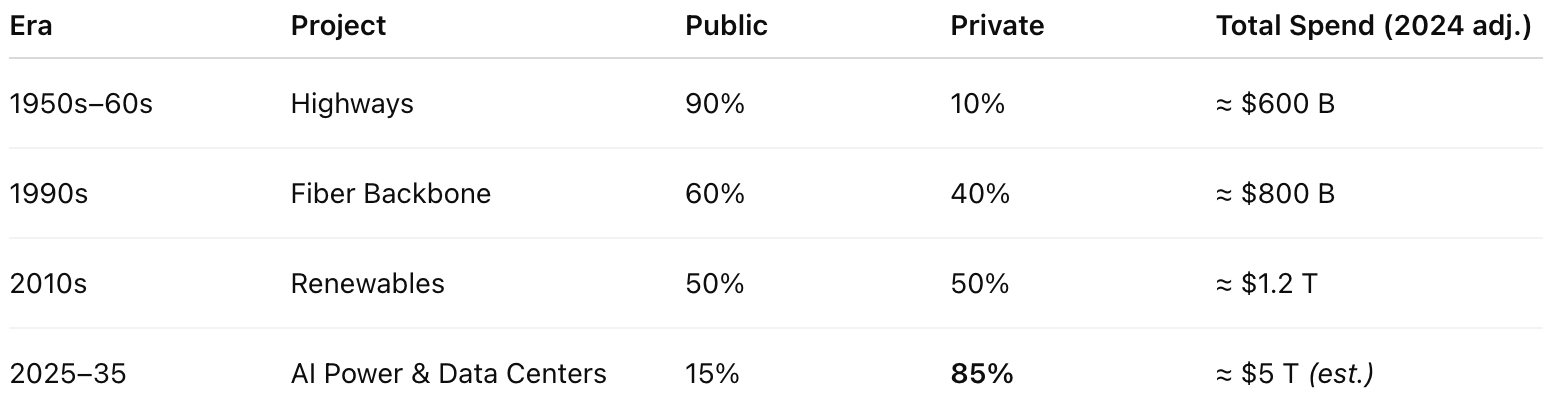
The 1990s fiber buildout?
Speculative—companies laid cable hoping internet traffic would materialize.
Result: 2001-2002 telecom bust when demand didn’t justify investment.
The 2025-2030 AI power buildout?
Pre-committed via 20-year offtake agreements signed BEFORE construction!
Amazon doesn’t pay $650 million Talen energy for data center hoping they’ll need power in 2030.
They’re securing it because they already have AI deployment roadmaps requiring that exact capacity.
This has NEVER happened in infrastructure history: Private companies committing hundreds of billions with multi-decade revenue certainty.
Nuclear Renaissance Is Real (And Accelerating)
Nuclear energy is experiencing a remarkable resurgence as the only carbon-free baseload power source capable of meeting AI’s insatiable appetite for electricity.
The U.S. government is aiming to quadruple nuclear energy capacity by 2050 and restart the domestic uranium industry to support soaring energy demand.
Major technology companies have made substantial investments in nuclear power partnerships.
Constellation Energy, the largest producer of carbon-free electricity in the United States, has emerged as a primary beneficiary of this nuclear renaissance.
The company produces more than 32 gigawatts of capacity, with roughly 90% of its annual output being carbon-free, positioning it perfectly to meet the high-uptime, low-emissions requirements of AI data centers.
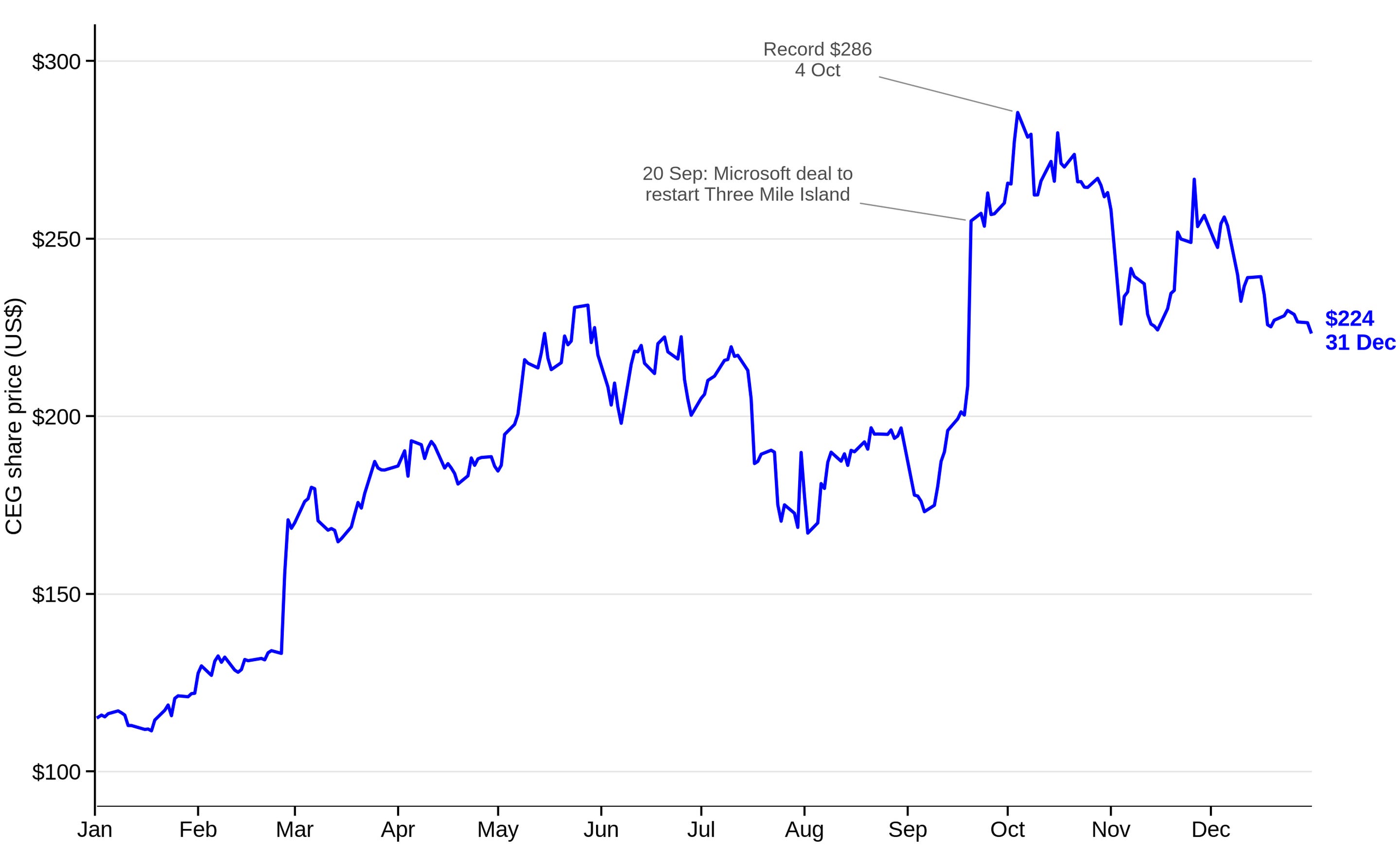
Constellation’s stock has more than tripled since ChatGPT’s launch in November 2022.
The nuclear opportunity extends beyond established operators to next-generation technologies.
Small modular reactors and microreactor technologies are attracting significant capital, with companies like Oklo (backed by Sam Altman) seeing their stock surge 500% in 2025 despite generating no revenue.
The investment thesis is straightforward: nuclear provides the only proven technology capable of delivering gigawatt-scale, carbon-free, baseload power that AI infrastructure demands.
The hyperscaler energy trilemma has only one solution:
Carbon-free (meets corporate climate pledges)
Baseload (24/7 reliability AI training requires)
Scalable (gigawatt-level capacity)
Solar and wind? Can’t provide 24/7 power.
Natural gas? Carbon emissions violate sustainability commitments.
Batteries? Can’t store gigawatt-scale for continuous AI training.
Only nuclear checks all three boxes.
Policy response has been unprecedented bipartisan acceleration:
Biden administration: $900 million for nuclear development in Inflation Reduction Act
Bipartisan Infrastructure Bill: $6 billion preventing nuclear plant closures
Trump administration: Signaled support for Small Modular Reactor (SMR) development
State legislatures: Virginia, Texas, Ohio fast-tracking nuclear permits for data center zones
Even the Sierra Club—which spent 40 years fighting nuclear—now quietly supports existing plant life extensions because it’s the only path to AI growth AND decarbonization.
Companies that own operational nuclear capacity—which takes 10-15 years and $10-20 billion to replicate —now control monopoly assets.
There are maybe five companies globally capable of building new nuclear at scale.
And hyperscalers need gigawatts today, not in 2040.
Existing nuclear operators can name their price.
Nuclear Stocks That Already Captured The Theme
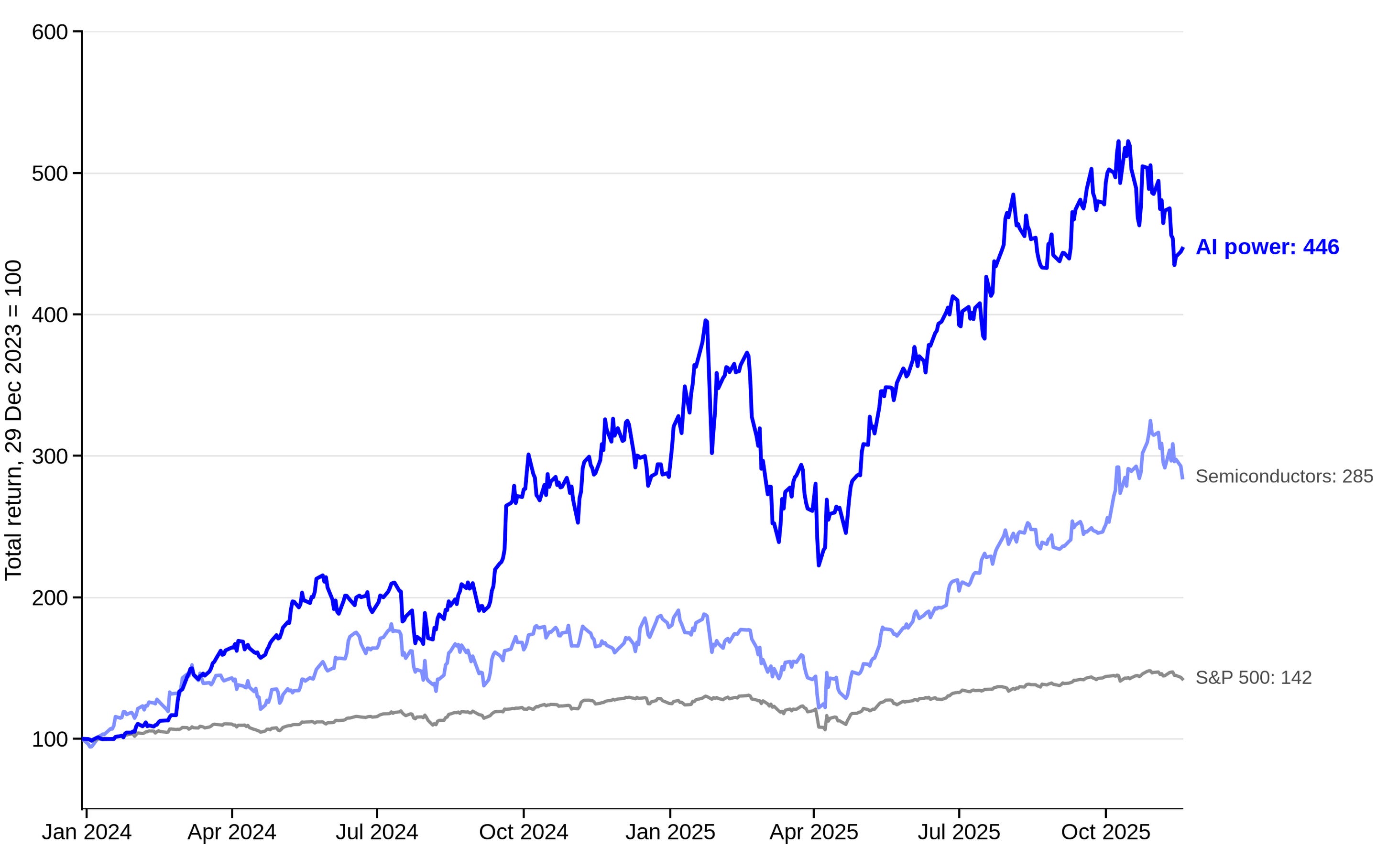
While diversified investors debated “concentration risk”, nuclear energy stocks delivered the exceptional performance—fueled by indisputable AI boom.
Constellation Energy : Up 62% YTD through October 2025, missed Q3 earnings but stock reversed higher same-day as investors prioritize 20-year hyperscaler power contracts over quarterly results—market betting on multi-decade contracted cash flows from AI infrastructure buildout.
Vistra : Up 85% in 2025 (top 10 S&P 500 performer) despite revenue miss, just announced 1,200 MW, 20-year contract for Comanche Peak nuclear plant at undisclosed premium pricing—validating thesis that nuclear power commands premium from hyperscalers seeking carbon-free baseload capacity.
Talen Energy : Up 75% in 2025, beat analyst expectations despite Amazon direct-supply deal facing regulatory challenges—proving direct-to-hyperscaler business model viable even with initial regulatory headwinds and establishing blueprint for behind-the-meter data center arrangements.
GE Vernova : Up 380% since April 2024 spinoff, trading at 30x forward earnings with $36-37B revenue guidance and multi-year order backlog—premium valuation justified by grid infrastructure and power generation equipment demand accelerating from AI buildout and broader electrification trends
Analysts in November 2025 captured the dynamic perfectly:
“The market is applying a generous discount rate to the sector’s near-term risks, prioritizing its future promise. Strong share price appreciation and significant strategic deals coexist with mixed short-term financial results. This divergence suggests investors must weigh powerful policy tailwinds against erratic quarterly performance.”
Translation: The market has moved from pricing quarterly earnings to pricing 20-year contracted revenue streams.
That’s not speculation—it’s re-rating an entire sector from “boring utility” to “AI infrastructure enabler”.
Why Energy beats Semiconductors in 2024/2025?
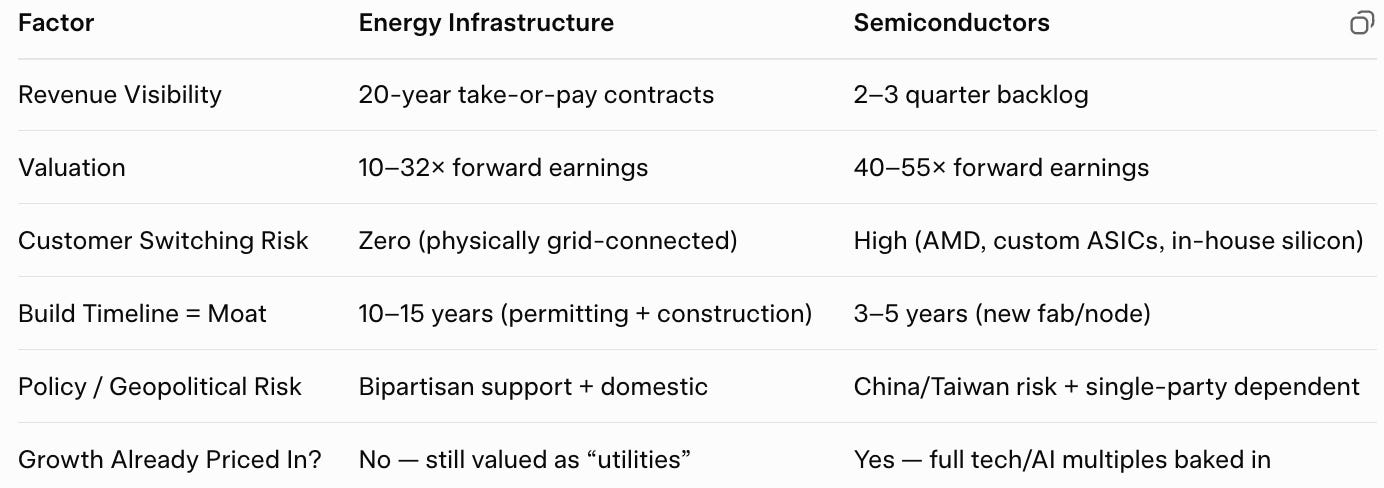
Simple, in five words: A 20-Year Contract Moat.
Yes, Nvidia has been spectacular—up 3,000%+ over five years.
But it trades at 40-50x forward earnings with zero revenue visibility beyond 12-18 months.
Energy infrastructure plays trade at 10-32x with contractually guaranteed revenue through 2042-2045.
This is the “quiet” part, I think, the market hasn’t fully priced yet:
The companies that control the electrons have signed decades long, inflation-protected, zero-switching-cost monopolies… and the market is still giving them utility multiples while handing 50× earnings to companies that can be disrupted in a single node cycle.
That’s why the green line on the chart went outperforms — and why the divergence still has years left to run.
When Amazon commits to $650 million for 1,920 MW through 2042, that’s not a purchase order that can be canceled if AI spending slows.
It’s a 20-year revenue annuity backed by an $2.5 trillion market cap company.
When Vistra signs 1,200 MW for Comanche Peak through 2045, they’re not hoping demand materializes.
They’ve already locked in the cash flows.
Nvidia sells chips that become obsolete in 24-36 months and face AMD competition, custom silicon threats, and geopolitical China risk.
Constellation owns nuclear plants that cannot be replicated in less than 10-15 years and face near-zero competition.
One is a product cycle.
The other is a monopoly asset.
Join 1,000+ Investors Using the 80/20 Rule to Build Smarter, Higher-Returning Portfolios
The Pareto Investor delivers a proven, systematic framework to apply the 80/20 rule to stocks — focusing only on the tiny fraction of companies that drive nearly all market gains.
Membership Tiers for 2026:
Premium — Everything you need to outperform the market with less effort:
Full access to all live Pareto portfolios (Growth, Dividend & Permanent)
Monthly portfolio updates with exact stock selections
Rebalancing alerts & detailed review framework
Exclusive investment insights & advanced portfolio optimizations
Elite — Everything in Premium & permanent ownership of my most powerful tools:
Pareto Elite Sheet — Fully automated annual rebalancing, real-time portfolio dashboard, and live tracking.
50+ Years of Historical Stock Data.
Pareto Watchlist & AI Stock Screener.
EXCLUSIVE All-Weather Portfolio — Immediate, exclusive access to my stock-based portfolio built to hold up in every market. Available only to Elite members.
Only 4% of stocks account for nearly all net wealth creation in the market. Why settle for mediocre index returns held back by thousands of underperformers? Join 1,000+ investors focusing only on the rare winners — and upgrade your returns with the Pareto Principle today.
I’ll Be Direct About What’s Happening
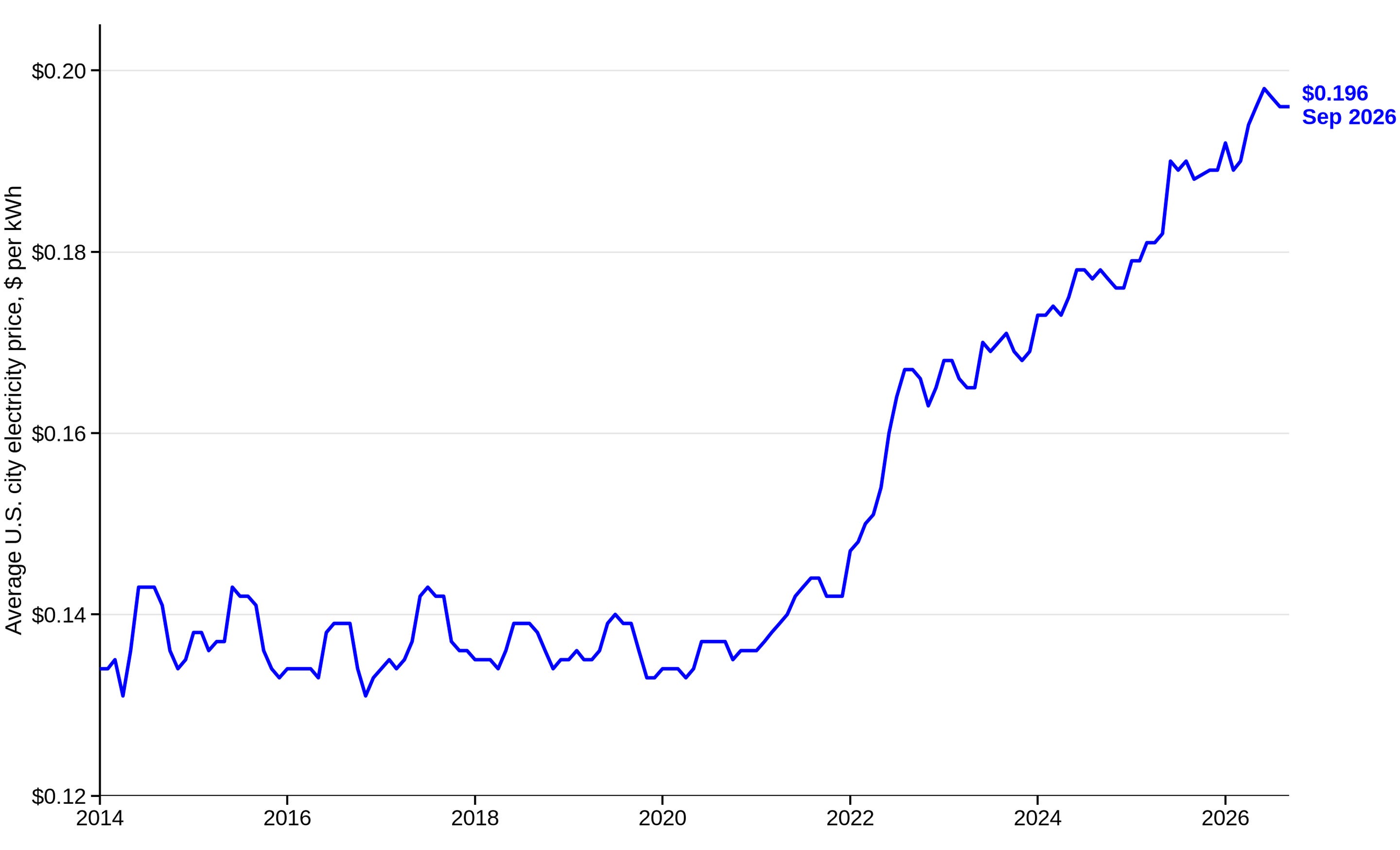
Your electricity bill is about to spike 30-50% over the next five years.
And energy investors will profit from every dollar of that increase.
Here’s the regulatory model that creates guaranteed wealth:
Utility invests billions building generation capacity for data center customers
Earns guaranteed 9-11% regulated return on that investment
Bills ALL ratepayers—residential, commercial, industrial—not just data centers
Repeat annually for decades
Every dollar gets recovered from ratepayers plus the regulated return.
Energy stocks don’t just win if AI succeeds. They win regardless—because the infrastructure gets built and ratepayers fund it.